
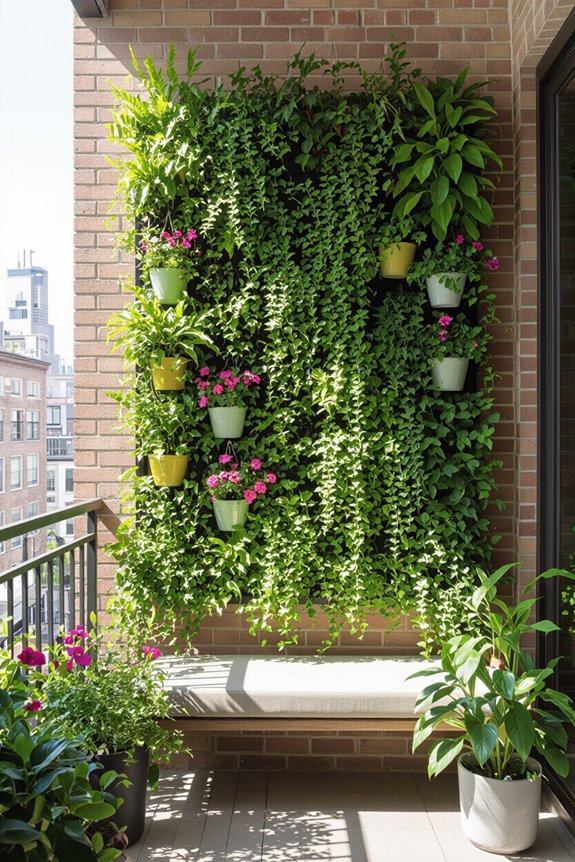
Want to turn your small space or apartment balcony into a lush paradise? Start by picking a sunny spot and choosing fun plants like herbs, succulents, or climbing vines. You can use creative ideas like hanging pots, wooden pallets, or even shoe organizers to save space. Don’t forget to water your plants regularly and keep an eye out for pests! Excited yet? Stick around, and you’ll discover more tips to help your garden thrive!
Key Takeaways
- Choose sun-loving plants like herbs and flowering vines to thrive in small vertical spaces.
- Utilize creative structures such as hanging pots, repurposed crates, and tiered shelves to maximize space.
- Ensure easy maintenance by placing the garden close to water sources and regularly checking for pests.
- Embrace seasonal adjustments, planting annuals in spring and pruning in fall for optimal growth.
- Repurpose materials like tin cans and shoe organizers to create unique and visually appealing planters.
How to Create Your Own Vertical Garden
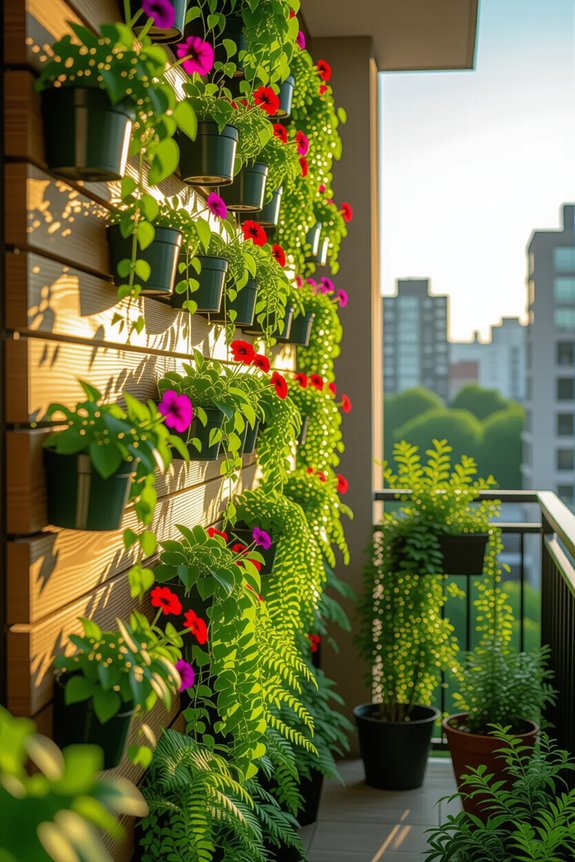
Creating your own vertical garden can be a fun adventure, especially when you realize how easy it is to bring a splash of green into your space! First, pick a sunny spot. You can use a wall, fence, or even an old bookshelf. Next, choose your plants. They should be ones you love and that thrive in your light conditions. Herbs, succulents, or colorful flowers work great!
Now, get creative! You can hang pots, use pockets, or even repurpose old crates. Don’t worry if it’s not perfect; it’s all about expressing yourself. Water your plants regularly, and soon you’ll have a lush, living art piece. So grab your supplies, and let’s get growing—your green thumb awaits!
Understanding Vertical Gardens and Their Benefits
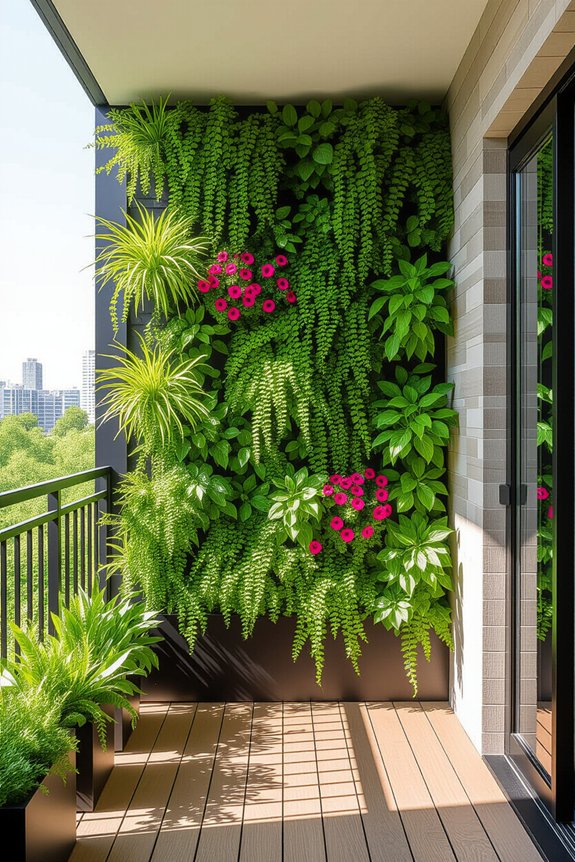
While many people think of gardens as sprawling plots of land, vertical gardens show us that even the smallest spaces can bloom with life! These creative setups let you grow plants upwards, saving precious floor space. You can transform a bare wall or balcony into a lush oasis filled with colorful flowers and fresh herbs. Plus, vertical gardens improve air quality, making your home feel fresher and more inviting. They also add beauty and a touch of nature, which can brighten your day. Imagine sipping your morning coffee surrounded by vibrant greenery! So, if you’re short on space but big on dreams, a vertical garden might just be your new favorite project. Let your creativity flourish; the sky’s the limit!
Choosing the Best Location for Your Vertical Garden
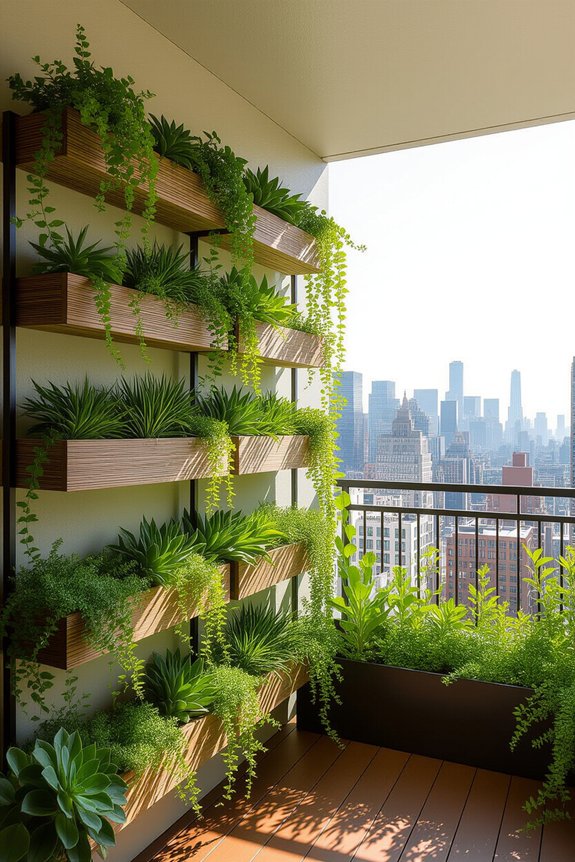
Finding the perfect spot for your vertical garden can feel like a treasure hunt, and it’s exciting to think about all the possibilities! Start by checking where the sun hits your space. Most plants love sunlight, so aim for a spot that gets at least six hours of light daily. Next, consider water access—having a nearby faucet makes your life easier! You’ll also want to think about visibility; placing your garden where you can see it daily will brighten your mood. Finally, make sure it’s sturdy enough to hold your plants. Remember, a little whimsy can go a long way, so don’t be afraid to get creative! With the right location, your vertical garden can flourish and bring joy to your home!
Selecting the Right Plants for Small Spaces
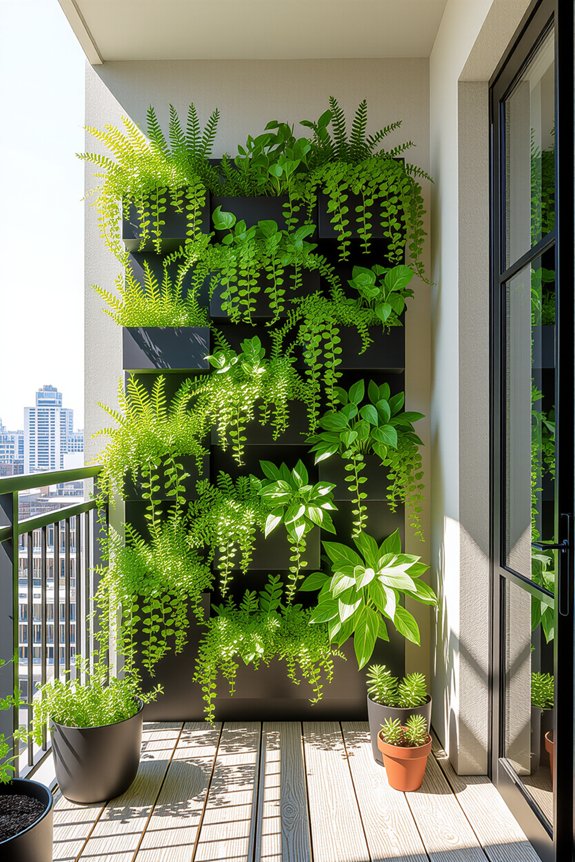
Choosing the perfect plants for your vertical garden can feel like picking out your favorite candy—so many options to contemplate! To make it easier, think about plants that thrive in small spaces and can handle vertical growth. Here are some great choices:
- Herbs: Basil, mint, and parsley add flavor to your meals and look lovely.
- Succulents: These hardy plants come in unique shapes and colors, needing little water.
- Flowering Vines: Sweet peas or morning glories can add a pop of color while climbing high.
DIY Vertical Wall Planters: Step-by-Step Guide
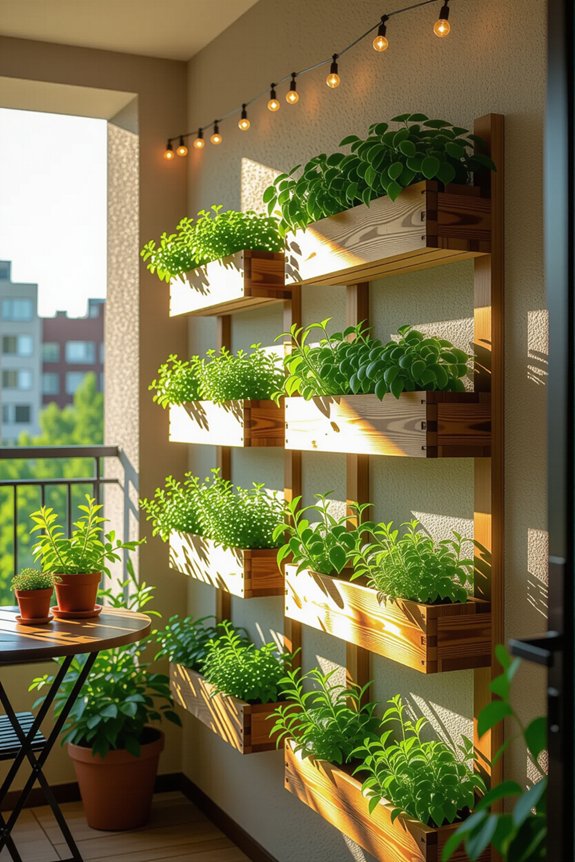
Ready to transform your wall into a green masterpiece? Let’s jump into creating your very own DIY vertical wall planter! First, gather some wooden pallets or sturdy wooden boards. Next, sand them down to avoid splinters—ouch! After that, attach landscape fabric to the back to keep soil in place. Now, fill each section with potting soil and your favorite plants. Herbs like basil and mint work great, or go for colorful flowers! Hang your planter securely on the wall, and voilà! You’ve got a stunning green display. Don’t forget to water your plants regularly; they’ll love you for it. Enjoy watching them grow, and feel proud of your leafy creation! Happy gardening!
Creative Ways to Use Shelves for Vertical Gardening
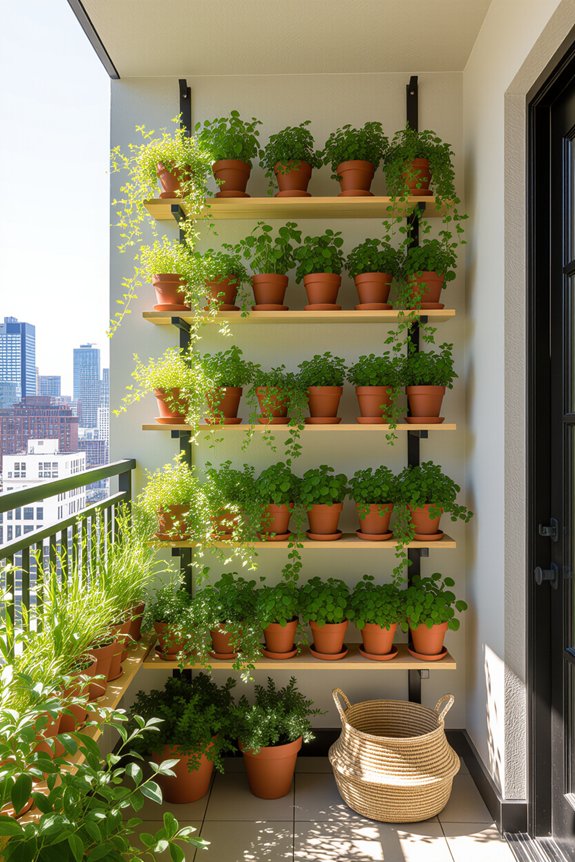
After creating your beautiful DIY vertical wall planter, why not take it a step further? Using shelves can add even more charm and greenery to your small space! Imagine stepping onto your balcony and seeing vibrant plants cascading down. Here are some creative ideas to get you started:
- Tiered Shelves: Stack different-sized shelves for a playful, layered look.
- Floating Shelves: Install floating shelves to save floor space while showcasing your plants.
- Repurposed Wood: Use old crates or pallets as rustic shelves for a cozy vibe.
These options not only make your space look inviting but also let you experiment with various plants. So go ahead, let your creativity blossom and transform your space into a green paradise!
Hanging Planters: Maximizing Vertical Space
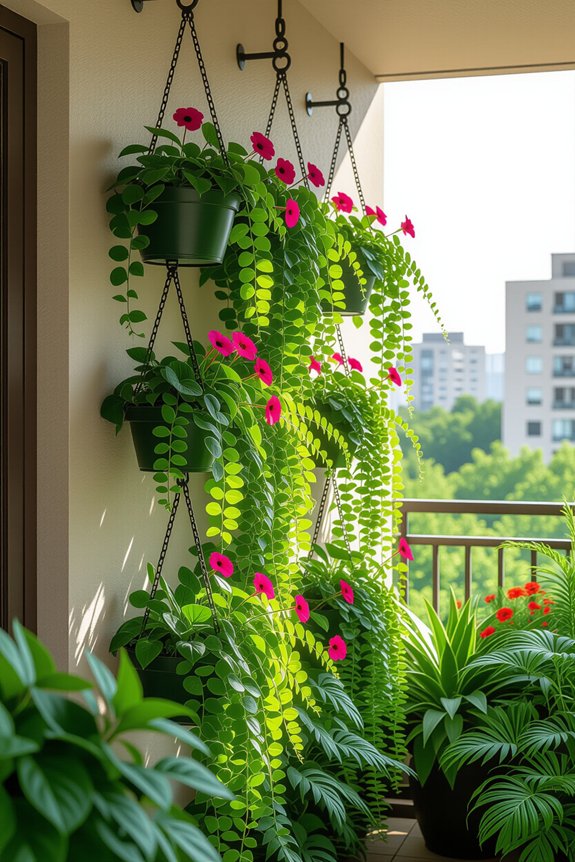
While you might think floor space is all you have, hanging planters can truly transform your small area into a lush oasis! They’re a fun way to add greenery without taking up valuable ground space. You can hang them on walls, railings, or even ceilings—just think of the possibilities!
Here’s a quick guide to help you choose the right plants for your hanging planters:
| Plant Type | Light Needs | Watering Frequency |
|---|---|---|
| Herbs | Full Sun | Every 1-2 weeks |
| Succulents | Indirect Light | Every 2-3 weeks |
| Ferns | Low Light | Weekly |
| Flowers | Bright, Indirect | Every 1-2 weeks |
Repurposing Materials for Your Planter Projects
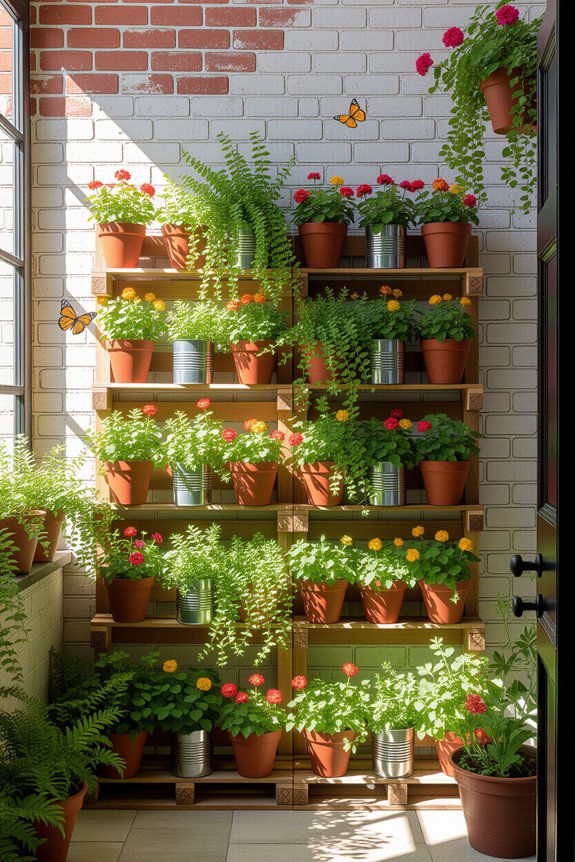
If you’ve ever wondered how to turn everyday items into beautiful planters, you’re in for a treat! Repurposing materials not only saves money but also adds a personal touch to your garden. Let’s explore some fun ideas to get you started:
- Old wooden pallets can become stunning vertical gardens.
- Tin cans transform into quirky planters with a splash of paint.
- Shoe organizers can hold your small plants, adding charm to any wall.
Get creative and think outside the box! You might surprise yourself with what you can use. Each repurposed item tells a story, and your garden will be uniquely yours. So gather those forgotten treasures and let your imagination run wild! Happy planting!
Key Features to Consider When Choosing Vertical Garden Kits
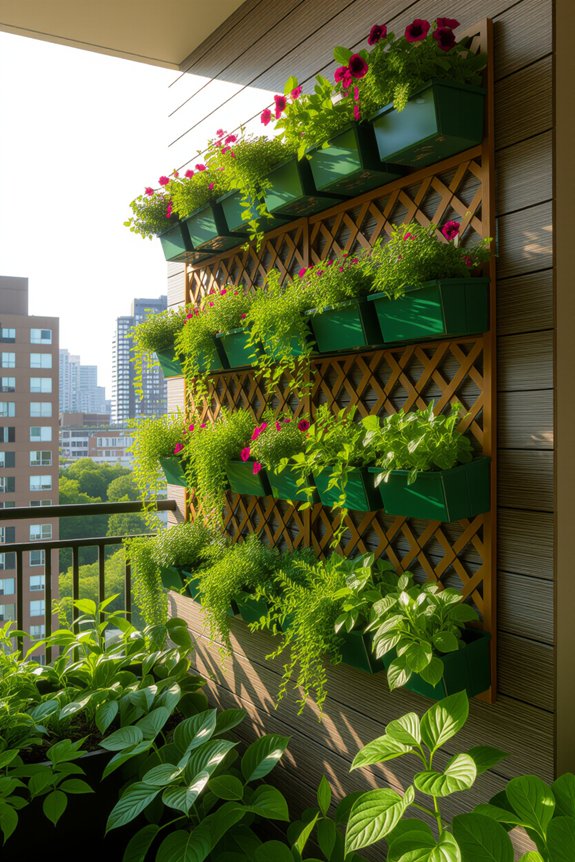
When you’re diving into the world of vertical garden kits, it’s essential to keep a few key features in mind to guarantee you find the perfect fit for your space. First, consider the size of your area; compact kits are ideal for small balconies. Next, check the materials—durable options like plastic or wood can withstand the elements. Drainage is vital too; you want your plants to breathe, not drown! Think about the type of plants you love; some kits work best for herbs, while others shine with flowers. Don’t forget about ease of assembly—because who wants a puzzle when all you want is a beautiful garden, right? With these tips, you’re ready to grow your green oasis!
How to Incorporate Trellises for Climbing Plants
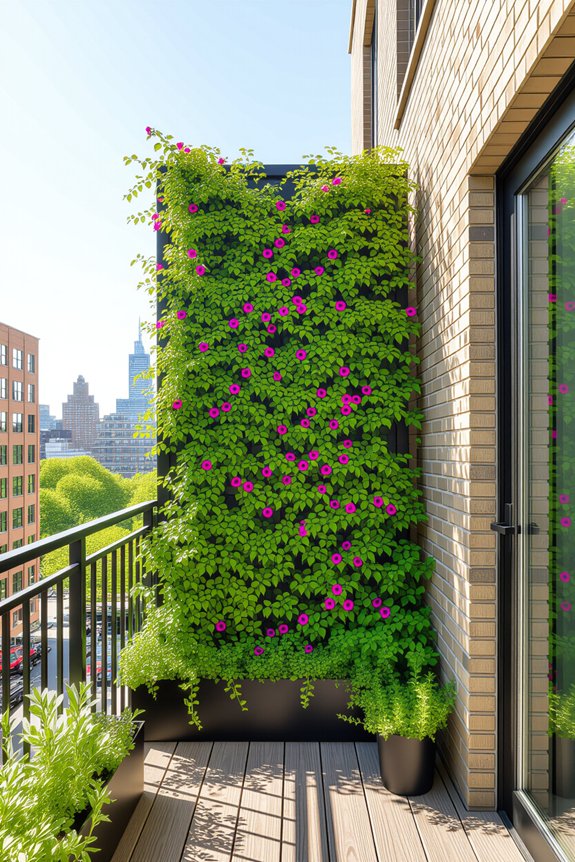
Trellises can be a game-changer for your vertical garden, adding height and character while giving climbing plants the support they need. They’re like a stage for your plants, helping them shine bright! Here’s how to make the most of trellises in your small space:
- Choose the Right Material: Wood, metal, or even fabric can work wonders. Pick what fits your style!
- Position Wisely: Place your trellis against a wall or balcony railing to maximize space.
- Select Climbing Plants: Go for fast-growing varieties like beans or sweet peas that’ll cover your trellis in no time.
With a little creativity and care, your vertical garden will burst with life, making your small space feel like a lush oasis!
Vertical Garden Systems for Growing Herbs and Vegetables
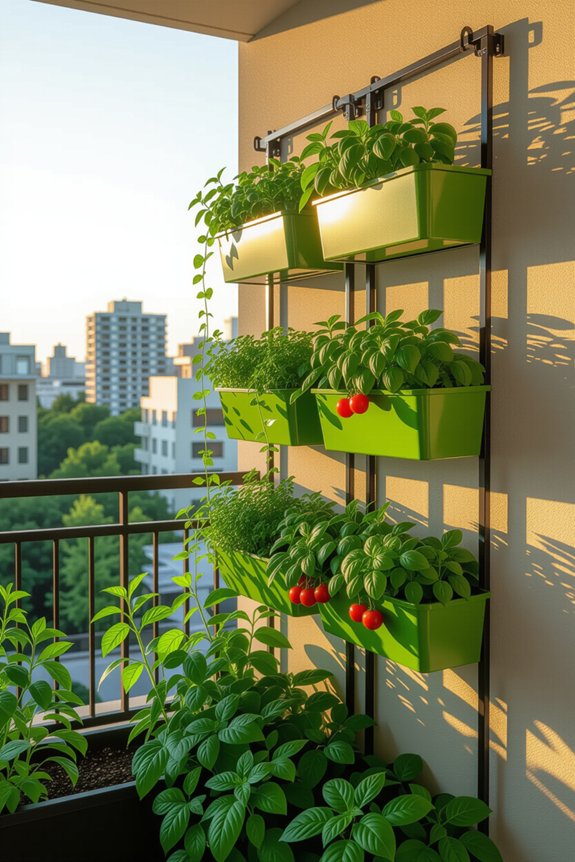
Creating a vertical garden system for growing herbs and vegetables can transform your small space into a vibrant, green paradise. Imagine stepping out onto your balcony and being greeted by fresh basil, juicy tomatoes, and crisp lettuce, all thriving in their vertical homes. You can use wall-mounted planters or stacked pots to maximize every inch. Just make sure your plants get enough sunlight and water. Herbs like mint and thyme are perfect for beginners, while leafy greens can flourish in smaller spaces. Plus, nothing beats the joy of cooking with your homegrown ingredients! So, roll up your sleeves, gather your pots, and get ready to create a mini-garden that’ll make your neighbors green with envy. Happy gardening!
Designing a Beautiful Vertical Garden
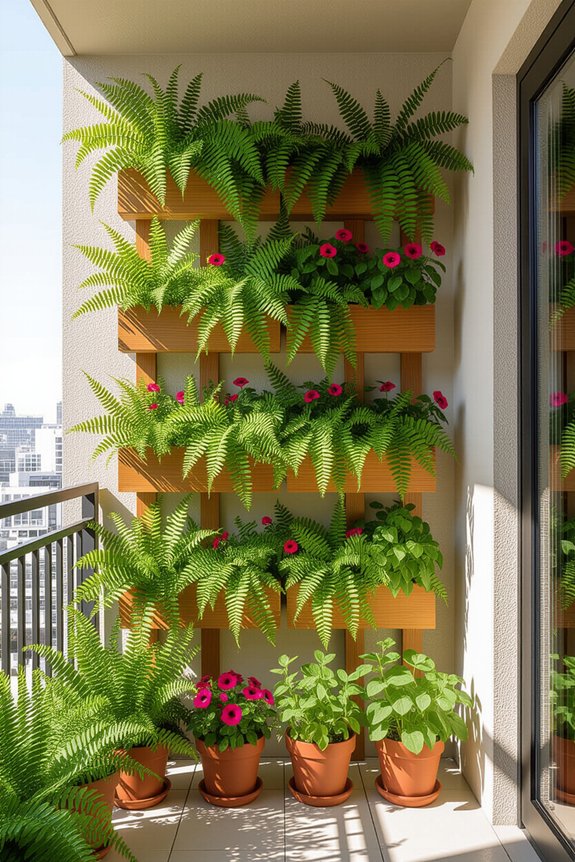
Designing a beautiful vertical garden can feel like starting an exciting adventure right in your own home. You’ll create a stunning display that not only adds charm but also makes your space feel alive. Here are some tips to get you started:
- Choose the Right Plants: Pick a mix of flowers, herbs, and leafy greens to create visual interest and variety.
- Use Creative Structures: Consider pallets, trellises, or hanging pots; anything that adds height and personality to your garden.
- Think About Sunlight: Make sure your plants get the right amount of sunlight, so they thrive and keep you smiling.
With a little planning, you can transform even the smallest space into a lush green oasis, perfect for relaxing or entertaining!
Quick Maintenance Tips for Vertical Gardens
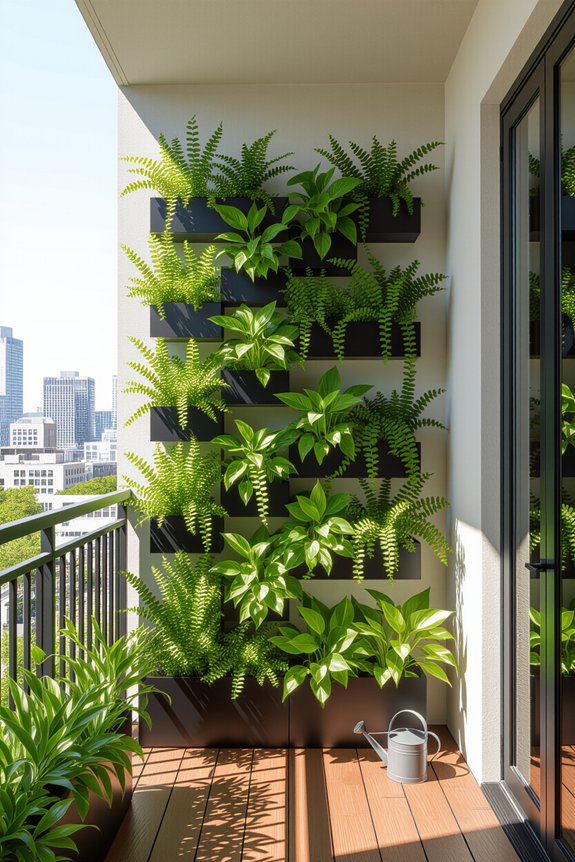
Once your vertical garden is up and thriving, keeping it looking its best is a fun challenge! Start by checking your plants regularly for any pesky pests or wilting leaves. A quick snip here and there can really boost their health. Water them consistently, but don’t drown them—think of it like a revitalizing drink, not a bath! Use a balanced fertilizer every few weeks to keep those blooms bright and beautiful. If you notice any dead flowers, don’t be shy—deadhead them to encourage more growth. Finally, enjoy your garden! Spend a few minutes each week just soaking in the beauty. After all, you’ve created something truly special, and it deserves your love and care!
Seasonal Considerations for Vertical Gardens
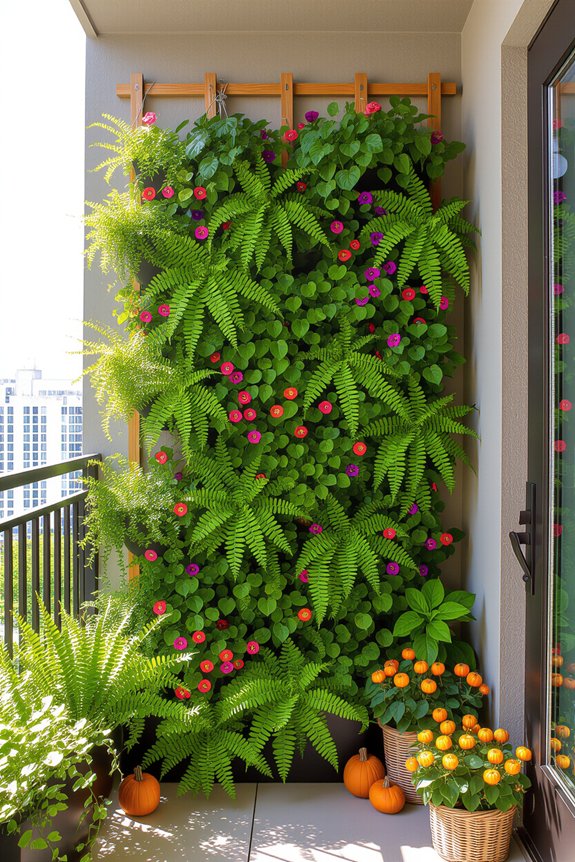
As the seasons change, so do the needs of your vertical garden, and keeping up with those shifts can be a rewarding adventure! You’ll find that each season brings its own set of tasks and opportunities to nurture your plants. Here are some seasonal tips to take into account:
- Spring: Start planting your favorite annuals for vibrant blooms.
- Summer: Make certain your plants stay hydrated during those hot days, and don’t forget to check for pests!
- Fall: It’s time to prune and prepare your garden for the colder months ahead.
Troubleshooting Common Vertical Gardening Issues?
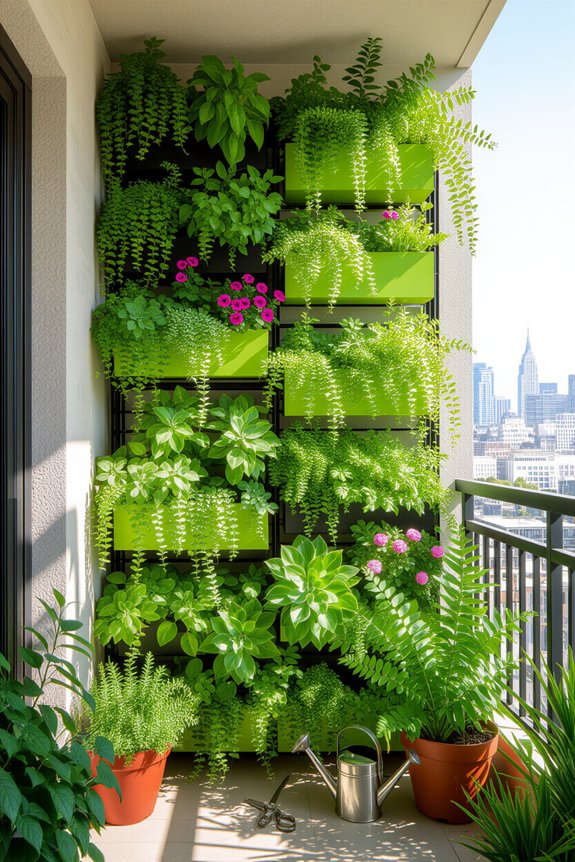
When you plunge into vertical gardening, you might run into a few bumps along the way, but don’t worry—every gardener faces challenges! If your plants seem droopy, check their watering. They may be thirsty or, surprisingly, overwatered. Yellow leaves often mean too much sun, so consider moving them to a shadier spot. Pests can sneak in, too! Grab some insecticidal soap and give your plants a gentle wash. If you notice mold, cut back on humidity and guarantee good airflow. Remember, gardening is all about learning. You’ll make mistakes, and that’s perfectly okay! Keep experimenting, and you’ll discover what works best for your vertical garden. Embrace the journey, and soon you’ll have a vibrant green paradise!
Frequently Asked Questions
Can I Grow Vegetables in a Vertical Garden Indoors?
Yes, you can grow vegetables in a vertical garden indoors! Choose compact varieties, use proper lighting, and guarantee adequate watering. With the right setup, you’ll enjoy fresh produce right from your indoor garden.
What Are the Best Materials for Building a Vertical Garden?
You can use materials like wood, metal, and recycled plastic for a vertical garden. Guarantee good drainage with pots or fabric. Consider using trellises or grids for support, and make it visually appealing with colors.
How Do I Prevent Pests in My Vertical Garden?
Did you know that 30% of home gardeners face pest issues? To prevent pests in your vertical garden, regularly inspect plants, use natural repellents, and encourage beneficial insects like ladybugs to maintain a healthy ecosystem.
Are Vertical Gardens Suitable for All Climates?
Yes, vertical gardens can be suitable for various climates, but you’ll need to choose the right plants. Consider factors like sunlight, temperature, and humidity to guarantee your garden thrives in your specific environment.
How Much Sunlight Do Vertical Gardens Need Daily?
Doesn’t every plant thrive in sunlight? Vertical gardens typically need about six hours of direct sunlight daily. If you’re in a shadier spot, consider shade-tolerant plants to keep your garden vibrant and healthy.